Monday, June 22, 2015

What's Next for Writing Assessment Services


Here's a little teaser for my clients and other friends:

In July I will begin setting up some exciting new offerings for Writing Assessment Services for 2015-16 - live classrooms for one-time and ongoing writing workshops, and a version of "office hours" and one-on-one tutoring.

I want to make the most of the traditional text-based evaluations I have used for decades and the online classroom/meeting structure I have used the last five years. I can't wait to share these opportunities with you!

Order now with confidence that you can change your order as you desire, or wait to order later as the offerings begin to appear - I can serve many students this year.

www.writingassessment.com

Now Entering My 20th Year Online!


Sunday, April 5, 2015

"Firmament" -- A Poem

Firmament—Psalm 57

A ladybug scratches across the page.
A lamb scampers after the ewe.
And we toil along the plane—
               Folding it into stairs and stories
               And thrusting toward the sky.

A turn of the book and the ladybug clings.
The lamb suckles quietly
               While his dam crops the grass,
               Dung dropping down to renew it.
And we push up towers and rockets.

Dear ladybug slips from the tilting leaf,
               Unshells her wings,
               And lifts away.
Lamb and mother bed down by a stream.
And we brood on rooftops, calling into the void.

We and the ladybug, we and the lamb
Dwell on the surface, die into the earth,
Leap up briefly or fly up as ash.

But one day we wake—
To see from above the LORD leaning down,
Unfolding the firmament to draw us up.

Graves will open, lambs lie with lions,
And we—with new eyes and arms and hearts—
Lift into fullness and glory foursquare.

©2015, Cindy Marsch


Saturday, April 19, 2014

An Easter Poem

Discerning the Lord

Ash Wednesday I try,
Walking up for my smudge,
To sense You in the rite--
Sooty crumbles skittering down my nose.

Lenten day by Lenten day
I squint my eyes to see,
In mundane March,
The moments of penitent piety.

Good Friday I shut myself in,
Poring over the story,
Calling up devotion,
Cross-legged on the bed with the Word.

Good Friday noon I find a place
Where still ‘til three
The faithful gather—
Remembering those dark hours.

Have I conjured emotion,
Struck up sadness,
Practiced the presence
Until I feel what I know?

Easter morning I shiver in the dark
With the few faithful,
In this cemetery somewhere,
To re-enact the rising.

But all for naught.
Dust, surrender,
Solitude, sleepiness—
All these are but negations.

While You,
Who fill all in all,
Walk lively among us,
Pour riches down our throats.

You shine, break forth,
Uplift, surround,
Overflow, abide—
Bursting our wineskins in forceful joy.

And suddenly the ashes fly upward,
A gust of real life—
Privations and vigils
Swept up in Your dance.

©2014, Cindy Marsch

Thursday, December 26, 2013

Happy New Year!

Many things have kept me from this blog for months, but we can all use something new for the New Year. Sometimes that can be a little something to freshen up our academic pursuits, and to encourage that I want to offer a bonus.

It begins with a reward--all existing clients will have 1000 words added to their current evaluation accounts, and those enrolled in courses with Writing Assessment Services can use the bonus for additional exercises within the course or for another kind of writing of their choice. For new clients it's a little incentive to go ahead and sign up for that new evaluation account or a Progymnasmata Tutorial to freshen up your school year.

I am happy to announce that I now have, courtesy of the good folks at the Association of Classical and Christian Schools, a permanent home for a great article written by Amy Kim, "Pro-gym-nas-what?!..." In this piece she details how we worked on the Progymnasmata together in my consulting relationship with The Oaks, a classical Christian school in Spokane, Washington, and how she's implemented these great writing exercises in her classroom over the years. Please find this article on my home page, at Writing Assessment Services.

Sunday, June 16, 2013

A Silly Poem


George Grant posted on Facebook this evening a quote by G.K. Chesterton:  "The poets have been mysteriously silent on the subject of cheese."

Well, I'm up for a challenge, even after being away for a long time!  This is what I posted in reply to G.G.'s post:

A Cheesy Poem

I once buttered up a young miss
By saying her skin was like swiss.
I meant it was silky with cream--
"Holes" was all to her it could seem.
I tried and I tried to do better,
And I likened her hair to a cheddar.
"Greasy" was all that she knew,
So she left me bereft and so bleu.
No! Her hair was as lovely as she,
Not stinky and gooey like brie.
So now I'm a miserable fella,
Sitting here with my nice mozzarella.
Stumble and sputter and wheeze--
You just can't po-et about cheese!

--Cindy Marsch, 2013

Wednesday, April 10, 2013

Friday Fictioneers, Delayed: "Bluer Than Blue"


(This post is actually from November 29, 2012, but I keep getting spam comments on it, so I'm experimenting with a different way to post it, for posterity.)

Friday Fictioneers is an opportunity to join a community of writers in the challenge of creating a 100-word story from a single picture.*  I just love the color in this week's photo prompt. And that woman with the shopping bag--she had to be in the story, in that sanitized place, all pretty and open and safe.  A passing comment from someone today gave me the kernel of the story, and here we go!

(Image deleted in hopes that that will stop the spam I've been getting on this post!)

Bluer Than Blue

Daniel had to get away, onto the open road. Still his taut teen self inside, grizzled in the beard but long and lean. The Harley was the ticket out of Mediocre, Pennsylvania down to the Magic Kingdom—a zipping roar away from the doughy missus, the disappointing son.  She understood--had a free flight of her own to escape with. They’d decorate for Christmas later.

He rounded a corner in Celebration, Florida, the sky impossibly blue at dusk, lights everywhere. Buzzing from the saddle, swaggering in boots, ready.

She looked right at him, denim up and down—“Daniel, you, too?!”

100 words

*Happy anniversary, Rochelle, our photographer this week!

Friday, November 23, 2012

Friday Fictioneers: "Press Conference"

This is a weird photo prompt, and many of the contributors to Friday Fictioneers have puzzled over it.  Here's what I did with it.  Click the link above to see what the others did with it, and maybe try your own version!


Press Conference

“After a few adjustments we are proud to unveil the Municipal Monument.  As you know,” the Mayor brightly assured us, her hot pink blazer glowing in the noon sun.  “As you know, we wanted to give as many local Artists as possible the opportunity to contribute to the Monument. It is a tribute to our diverse populace, friendly to all.”

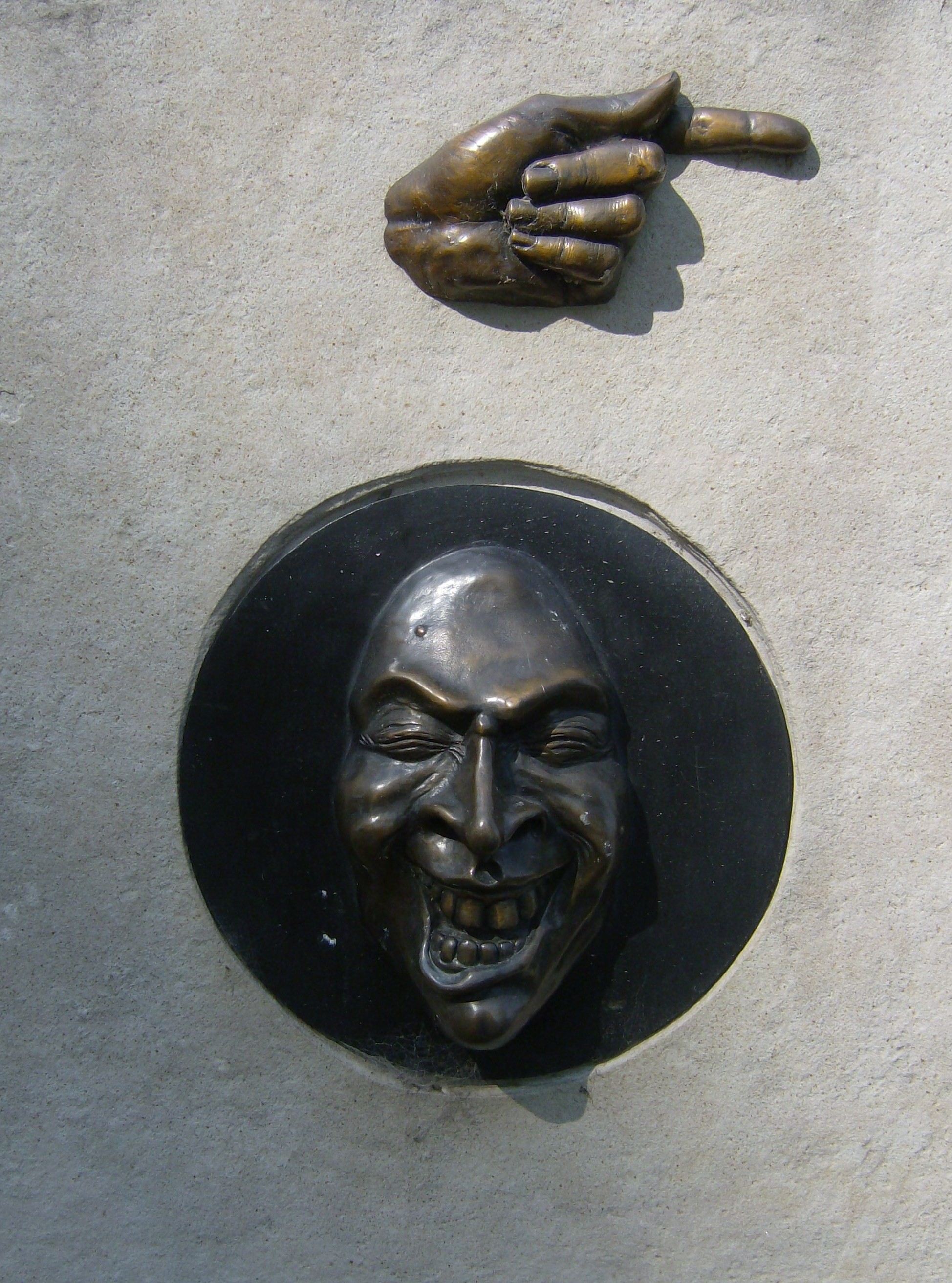
I turned to interview one of the contributors, a musky heap of burlap in huaraches, who chuckled, “Yeah, I started a great nude diving into the wall, but they made me change it into a hand. Yeah, that’s me below.”

100 words

Thursday, November 15, 2012

Friday Fictioneers: "Just Like Candy!"


This week's entry into Friday Fictioneers isn't terribly inspired, but it will do. Sometime's it's just like that, you know? Please join us!


Just Like Candy!

“Oh, Sweetie, know what you can do with those?  You can stack them just like this –“  She began rolling the towels into logs and inserting them into the closet according to hue.  “And then we’ll go out here—“ she clomped out into the living room in her cherry-red high heels, thrusting her rear out as she bent from the waist in a calendar-girl pose. “—and fan out these magazines in an in-VI-ting array!”

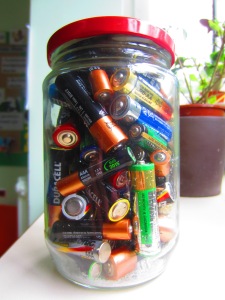
“But the old batteries in a jar?” I folded my arms into my sweatshirt - Oscar to her Felix.

“Just like candy!” 

--100 words

Wednesday, November 14, 2012

Online Book Club: *The Mind of the Maker* Chapter 3

UPDATE:  Well, guess what I saw last night?  Alec Guiness in *The Horse's Mouth,* about a quirky artist. It's kind of a comedy, in that dark sophisticated 1950's/1960's way, with some definite madcap shenanigans (destruction of a beautiful apartment in the name of "art").  But what's applicable to this discussion is one point when the artist regards a mural he's just painted, for which he had all kinds of vision--the raising of Lazarus--and he says something like, "Well, that's not what I had in mind at all."  Where was the problem?  In the Idea, in the Energy, in the Power?

Here's a link to the movie on Amazon Instant Video:  http://www.amazon.com/gp/product/B00A5IZHDC?ie=UTF8&ref=oce_digital

11-17-12
----------------

I'm a little discouraged that my last week's post is pretty lonesome, that I'm just talking to myself. [Update: I realize I didn't leave my proper link to last week's post on Cindy R.'s last week's post!  That's fixed now. How embarrassing.]

But to get ahead of myself, Sayers would say I'm a blogger whether anyone's reading my blog or not, or even, praise God, whether I get my blog post written or not!  (See p. 42.)  In any case, I'll plug along. I sometimes feel I can hold on to an idea only long enough to make a quick comment before my I.Q. plunges again.  Maybe it's my age.  In any case, this is another installment in the ongoing project of Ordo-Amoris.  

Sayers tells us that God, complete unto Himself as the "well-spring" is not manifest without a creature to witness the Creation. Makes me think, "If a tree falls in a forest and no one hears it, does it make a sound?"  That circles back to the poet idea above, from p. 42.  God is Creator eternally, even before we had a Creation.

p. 35:  "Those who [in disputing about God strive to transcend the whole creation] are more mischievously and emptily vain than their fellows." (Augustine)

p. 36  Mathematicians and artists have a way of seeing things that allows them to get outside their environments far enough to be able to describe them (dimensions and things).

p. 39 Sayers says that a work is always consistent with its nature.  In the power, though, what do we do with the critical theory of our time--well, of the last century--that says the work exists unto itself, or only in the mind of the reader, never mind what the author intends?

She talks a lot about how the works exist in the mind of the writer as whole beings well before they begin to be made manifest in the Energy/Activity. But I have experienced having a germ of an idea and then seeing where it might be going as I develop it in writing. I've read of many novelists working that way, too. Would Sayers say they just didn't know everything that was already in their heads before they got it out?   She also says, though, on p. 40, that we must have the Energy/Activity in order to have the idea known to others AND OURSELVES. If it already exists in the mind, why must it have expression on paper in order to exist?  Or is the Energy manifest in our minds before the translation of words on paper?  I get the feeling she's pushing her analogy too far in both directions by changing "Energy" to "Activity" and thus making it more practical and concrete AND saying Power "proceeds from the Idea and the Energy together," very credal language. I feel like my daughter the day she set one foot into a canoe and left the other on the dock and soon fell in the water--the things are drifting apart.

p. 42   IS a poet still a poet if he has no way to express his poetry?  What makes a poet?

p. 43  I don't like the disdain of "men of science."  If they don't behave this way, if they're renaissance men, are they "really" poets, then and not scientists?  On p. 44, she sets forth the idea that science depends on progress, the idea that we're always building and improving, but that art recognizes single geniuses in every age, whose work cannot be progressed beyond or built upon but only added to by later geniuses.  But my husband Glenn did a great paper and talk on Benjamin Franklin a couple of years ago, making the case that he was one of those singular geniuses who had amazing expertise in multiple fields (statesmanship as well as science, for example). Some researcher whose name escapes me has shown how geniuses of different times stack up to one another by virtue of their prominence in their own time and our recognition of them in later time. So Galileo is one, and Newton, and some others.  But Benjamin Franklin is a rare genius who "has it all."  Would Sayers say he's risen above his being a scientist to become a poet, ultimately?

Here's the video of Glenn's talk. :-)  

I feel cranky in my response to Sayers, pressured to finish this chapter when I didn't feel like it, really.  Sorry about that! :-)


Sunday, November 11, 2012

Online Book Club: *The Mind of the Maker* Chapter 2

Tardy, I sigh.  But I will post nonetheless and hope to get ahead of this week's game this afternoon. We will see.  This is an ongoing project of Ordo Amoris. Please join us!

In Chapter 2 of The Mind of the Maker, Dorothy Sayers explores "The Image of God" and helps us to see how our comfort with the idea of God as Father should extend to comfort with the idea of God as Creator, the ideal of how He does these things helping inform how we should do them.

The quote from Aquinas at the front of the chapter, saying that the things we compare God to are rooted more in Him than in the things, reminds me of Platonism, our search for the ideal beyond ourselves. When we experience something here that seems "just perfect," it is simply that our imaginations haven't taken us as far as they might, if the material world can still satisfy them, even briefly.  I watched a fascinating video clip the other day, linked on Facebook by Sarah Hempel Irani, a local sculptor.  It is below, and it explains how Greek sculpture progressed to the ideal human image and then beyond, to the level of impossibility. It's fascinating!

On p. 21 in my edition, she says, "The Jews, keenly alive to the perils of pictorial metaphor, forbade the representation . . . ", but isn't it God, rather, who forbade, keenly alive to the perils for man?

P. 24 she notes that in science and math only formulae can avoid analogies, and she does a beautiful job explaining the problem with the wave/particle way of describing light.

P. 25 -- God as Father doesn't beget as men do. This made me think deeply about the reality that men might think they are begetting when they make love to their wives, bed a slut or prostitute, or even rape a girl -- but God controls the issue!  The man may think he's creating, bending the future to his will, but God controls all of that ultimately. "who -- not of blood nor of a will of flesh, nor of a will of man but -- of God were begotten."  (Young's Literal Translation)

P. 27  "We extend [the concept of a creator God] to the concept of a maker who can make something out of nothing; we limit it to exclude the concept of employing material tools."  I love how Sayers helps me understand philosophical concepts.  Then on p. 28, "We spend our lives putting matter together in new patterns and so "creating" forms which were not there before."  Cooking does that!  Fusion cuisine -- it's all fusion!

Finally, on p. 31, she says that "It is now [after three centuries of analytic bias] very difficult for the artist to speak the language of the theologian or the scientist the language of either. . . . [T]he human mind is once more beginning to move towards a synthesis of experience."  Hmmm.  Is that what all the "smells and bells" in emergent/emerging (I get them mixed up!) worship is all about?  Is that why we lament that we don't have any great Christian writers and artists just now--we're still working our way toward that synthesis?  Will or do the conservative synods, presbyteries, and other bodies of ruling theologians allow for or welcome artistic expression of theological truths?  How far can those be "embodied" to remain orthodox, how far can we take them in worship? We have used the poems/prayers from Puritans, *Valley of Vision,* in worship in years gone by -- does Wendell Berry qualify?  Your favorite writer?  HUGE questions here.

Wednesday, November 7, 2012

Wednesday in November

Here's a little 100-word piece I made NOT for Friday Fictioneers, but for a collection the first hostess of FF, Madison Woods, is putting together--100 stories of 100 words based on the photo below.  Obviously it refers to a November Wednesday another year, but still . . .


Entry for Madison Woods’s 100x100 Project
Submitted 10/26/2012


Wednesday in November

Everything is late this morning.

In the chilly silence when I went out for the paper it wasn’t there. So dark—great banks of clouds  holding back the dawn.

Only later did I hear the thrum of tires, click of gears, and thump as the paperboy on his bike flung it into the yard. It won’t have the news we all stayed up late to hear this morning. And it’s still not decided. They’ll count and bluster and hold press conferences and file lawsuits.

But the clouds have lifted with the sun, and there it is at last. Another day.

100 words.

Friday Fictioneers: "Castle"

First things first--congratulations to Jen / Elmowrites on her great creative act of the week--baby Sebastian!

I missed Friday Fictioneers last week, but at the first glimpse of this week's photo an image formed in my mind, and ten minutes or so later, I had this:

Castle


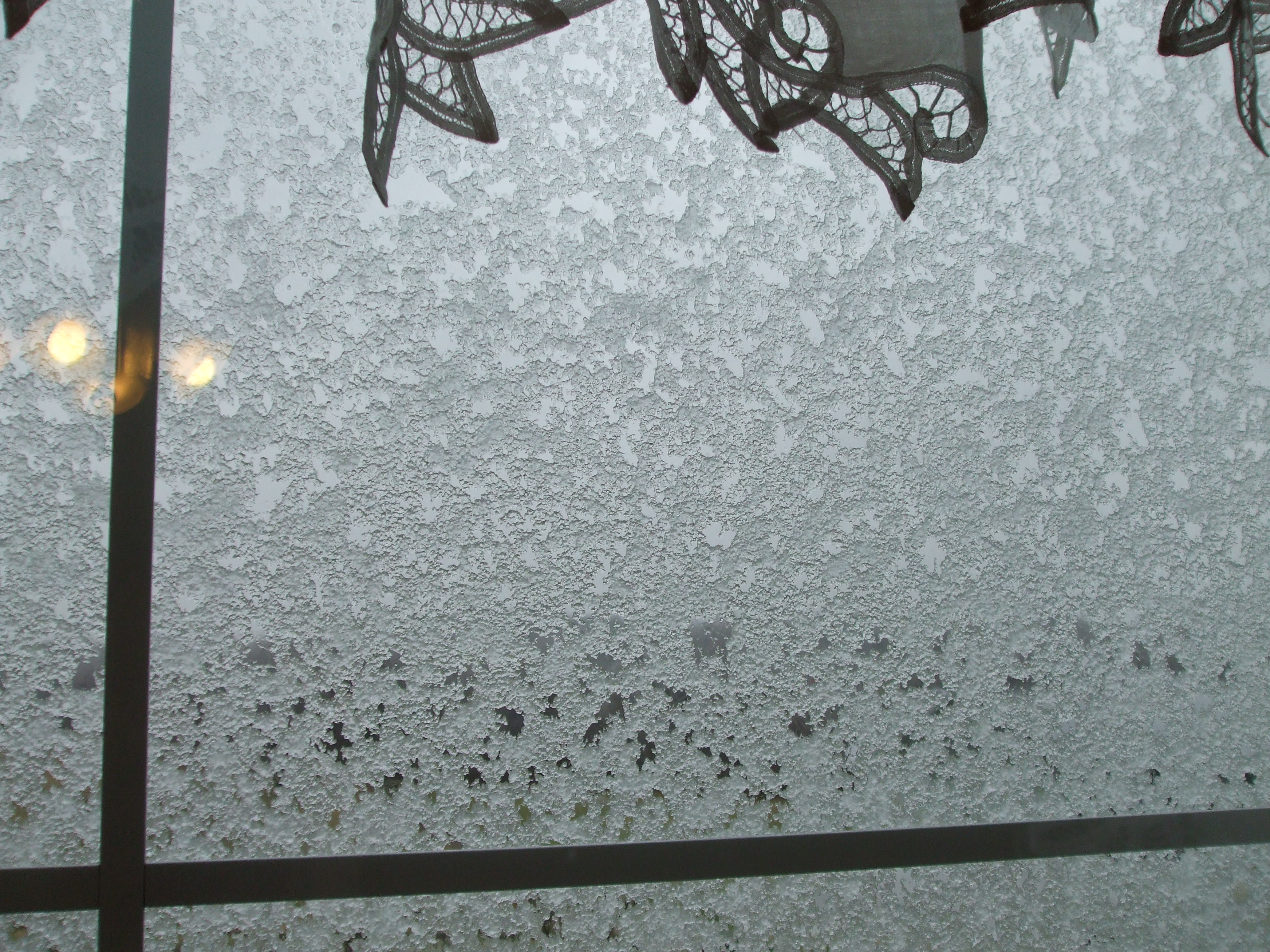
Rosemarie must put her hand up against the wet pane—it drew her to take measure of her enclosure.  Last night she had basked in the yellow glow of the room, safe from the black outside. Then the patter of sleet, then the almost inaudible exhale of snow gathered on the window as she slept. At dawn the light was muted, grayed down, and with a catch of breath she untangled herself from the bed and set one foot to the cold tile, leaning across the space to the window.  Her curls caught in the starched lace of the curtain.


100 words

Please jump in and join us if you like. I really enjoy this part of my week!

Thursday, November 1, 2012

Online Book Club: *The Mind of the Maker*

My wise, witty, and wonderful friend Cindy Rollins at Ordo Amoris / Dominion Family is hosting a nice, slow read through Dorothy Sayers' classic The Mind of the Maker, which I just love having an excuse to read.  I sat down this evening with my satisfying Levenger note cards

and started in with the Preface, Introduction by Madeleine L'Engle, and Chapter 1: "The 'Laws' of Nature and Opinion."  I'm going to post here my own contributions to the discussion, but first I'm going to read my predecessors.  You can find all the links here.

Cindy R. asks if we like Sayers' style--yes, of course, it's delightful!  She makes me long for the life I haven't had, that scholarly life in trimmed-lawn quads traversed by busy people in academic gowns with stacks of books, part of what always made Mystery! such a fun show to watch.  I love her naughty little limerick that is only tangentially necessary to her discussion of the "law" of probability in genetics--it doesn't say the fourth baby in a Mendelian sequence will be male or female or mulatto but that with enough babies we'll get roughly that distribution.

I agree with Sayers that it is depressing, distressing, that too many conversations end with frustration, when I see that the other person just doesn't get it. Will this kind of misunderstanding increase as education diversifies into the public mass education on the one hand, full of bureaucratized recordkeeping, and individualized free education of all the amazing sorts we've sampled as homeschoolers and online educators and students over the years?  Then those outside of the mainstream will find that only the most talented of the mass-produced students out there will be able to hold a real discussion--it's a contrast from the olden days when a talented farmer's son (or daughter) would surprise everyone and hold court in the marketplace or force his way through law school or write great poetry quietly after the chores.

I love Sayers' idea that the creativity of man is a reflection of the Creator.

I also really enjoyed L'Engle's Introduction in my edition, but I won't spend time on that here.

The Chapter 1 distinction between historical fact, like Grimm's phonetic law, and natural law--a statement of physical fact--reminds me of a great xkcd cartoon I saw the other day:  "Electoral Precedent."  Other political hints come in her note about how our dumb laws are superceded by natural law when those dumb laws lead to war, pestilence, and famine.  The good intentions are well illustrated by our friend Debra Hilton's observation that mosquito nets so lovingly sent to Mozambique actually result in MORE malaria because the locals use them for really efficient fishing nets, casting all the little fish up on the beach to die and thus end their careers eating mosquitos. Natural law will out.

I wonder about applying this idea to our ideas of when our children should marry.  By natural law they ought to marry at about 15-18, I'm thinking, but our society has smothered natural law with expectations and half-measures of contraception. But natural law will out.

I love the commentary on Aristotle's dramatic unities--I've been fascinated with those since Mrs. Schwerdt's 12th grade AP English class introduced me to them. How satisfying that we prove the wisdom of Aristotle when we naturally respond well to drama that follows those "rules."

But we also strain against the yoke when we find God's laws inconvenient or limiting to our freedom, we think.  Sayers says we should not ask, "Is it pleasant?" but "Is it true?"  "Creeds are statements of fact."  I don't have to strain myself to believe that Jesus was come down from Heaven, born of a virgin--I merely affirm what my whole being resonates to in the truth of that statement--what glorious truth!

Friday, October 26, 2012

The Progymnasmata and The Modern Essay

Early this morning I wrote a response to a client wondering how to "sell" the Progymnasmata to parents interested in preparing their students to write "modern essays."  Below, in its email-y roughness but edited a bit for this post, is my response to her:

I have been very pleased that the Progymnasmata actually turn into some modern essay types with a bit of stylistic spin (and sometimes without it). For example, Frank D'Angelo (Composition in the Classical Tradition) uses a modern magazine essay, a eulogy or remembrance of Ralph Ellison, as an example of encomium/praise, and it's amazing to me how much the magazine piece follows the classic form.
Ultimately a student is supposed to use the smaller tools of the Progymnasmata in any way his rhetorical needs call for, and a student who can rattle off a quick proverb amplification knows just what to do when a typical quote-based SAT prompt comes around. The typical modern essay calls for perhaps definition (easy to use the amplification principles of proverb and anecdote to explore that), description (the principles if not the form of the classic exercise are appropriate here), comparison (there's a Progym for that, though more focused than the generic essay needs), thesis-support, and so forth. I think the speech-in-character is beautifully brilliant for a creative spin on a book report. Any student who can do what the Progym call for is well equipped to do high-level college essay writing, though some practice with the usual forms is not a bad idea, so students can make the leap.
I'm currently about to finish the book Racing Odysseus: A College President Becomes a Freshman Again, about a college president (not really a scholar but an administrator) who takes a sabbatical to go to St. John's College, the Great Books college in Maryland. He explains that St. Johns students go from the very old-fashioned, literally antiquated, Great Books curriculum there into all manner of jobs and graduate programs, including in the sciences, medicine, and so forth. I can see how they could, though I want to talk to my husband, a physics professor, about that. :-) In my experience the students who have done well in the Progym are over-prepared for whatever college writing will bring to them. Dorothy Sayers says in "The Lost Tools of Learning" that deep study of any one discipline can teach one how to study any other, and thus she champions Latin as the gateway to all learning. Memoria Press is grabbing hold of that principle in its curriculum, though I'm a little wary of it for those interested in the sciences and math.
For the modern essay as most of us know it, I can recommend Lucile Vaughan Payne's classic The Lively Art of Writing (Mentor Series)
I was dubious when Veritas Press Scholars Academy wanted me to use it for the Composition II course I developed (with a co-teacher and friend), but I'm in my third year of working with it and think Payne has some great principles for students needing to learn how to build a thesis-support essay. The instruction in this cheap little book (or portions of it) could be of great use as a supplement to the Progymnasmata.
How's that for a pep talk?

Friday Fictioneers: "When?"

Welcome again to my entry for Friday Fictioneers. We've had a change of administration (Thanks for previous service, Madison, and thanks for taking over, Rochelle!), so I'm not quite sure how to handle the links, but here goes anyway.


When?


It’s nigh unto noon and still we haven’t started outside. The dog needs a bath, the flower bed needs weeding, the birdbath needs mucking out.  But still we sit here, and I’ll have to peel my forearm off the tablecloth when I do get up.

The coffee in the pot is treacly, just at the start of the scorching dregs.

That little tree needs to get planted, too, probably out near the road, where one day it will bud and flower and glow and flame for the cars driving by.

But who will live here to enjoy it from this side?

101 words

Thursday, October 18, 2012

Friday Fictioneers: "Day Trip"

This week's Friday Fictioneers adventure is just plain silly, but a little creepy silly.  Enjoy, and click that link above to join us!  (You may need to enlarge the photo to see my character.)


"Day Trip"

“Wuhl now, ma’am, I done brought my chicken snack from KFC, like they told me in this here paper, and I’m a lookin’ for’ard t’ seein’ that there Jefferson Starship thang. But whut I don’ quite recollect is whether I shoulda brung a backpack and sit-upon like this here little lady behind me has got. I thought it was s’posed to be just a afternoon outin’, and we was gonna be back in time fer our reg’lar evenin’ routine at home.


“Could you tell me if I’m proper equipped to go see them friendly ET’s? Heard ‘bout ‘em nearly all my life!”

102 words

Friday, October 12, 2012

Friday Fictioneers: "Oasis"

It's time for Friday Fictioneers again!  I like to take a look at the photo prompt when it comes out on Wednesday and then just meditate on it a bit.  On a walk yesterday I imagined a setting in Mexico with a chihuahua and a cat and a bird, but by this morning when I looked again it became something different.

As always, I welcome feedback, including suggestions and impressions and approbations. :-)


Oasis

Hard-baked, blinding white, chalky air, throbbing heat. Where has she brought me, my archaeologist love? She promised Rome on the way, just one day—we scattered pigeons on the square, craned our necks in the Pantheon as rain misted down on us, and I gasped at the art.

Now in Tunisia it is only the oppressive heat, never mind that it’s almost easy to kick up a Roman coin on one of the old roads. But I have a plant on the roof, and I found a can of blue paint for the door, so I’m sheltered here.

99 words

Saturday, October 6, 2012

Friday Fictioneers: "An 'Experience' "


Here's this week's attempt at a 100-word story based on a photo prompt for Friday Fictioneers.  I have gone over the word count significantly the last few times and decided to go spare this time. Please join us if you'd like!


An "Experience"

I was dubious about the lighthouse for our next B&B. The last was a comfy pink Victorian with a creaky fan and a claw-foot tub, crowded mantels, and tasseled velvet.

But here the seagulls screamed and swooped, and the spotlight high above us groaned. Our hostess, flecked with iridescent scales, thumped down the platter of fresh boiled fish, gestured to the lump of butter and the bottle of hot sauce by the tureen of hot grits, and grinned at us, arms akimbo. A sticky gust of bright wind blew open the shutters as we scraped back our wooden stools.

99 words

Friday, September 28, 2012

Friday Fictioneers: "Gateway"


I skipped last week but am back again with another in the series of Friday Fictioneers. Click the link to learn more and join us! 


Gateway
We took a rocky path through rainy woods in the hills near the Portland neighborhood we'd grown up in. She knew I found her exotic and told me of how in Japan such trails have gateways where walkers compose themselves. We stood between boulders, I reached for her hand, and we climbed in step, her red Keds and my black ones disappearing into the leaves.
I asked more when we rested at the top, fascinated with the beautiful silky dark and light of her ancestors, her hair, her very still face. She scratched one long red fingernail against the corduroy over her knee and sighed as she mumbled about shiny pillars and a small roof—no good for shelter, just symbolic.
Two decades later I bought the hill, built the thing, and shored it up with brick from my childhood house--even lit it with spotlights. But she has long since disappeared into the city.
155 words
NOTE: If you want a REALLY great story, a true one that's nearly unbelievable, read my entry from yesterday

Thursday, September 27, 2012

Rejoice With Me!

Our wedding, July 5, 1986


Three years ago October I lost my wedding ring.  Mid-afternoon on Wednesday I was aware of it on my hand, and mid-morning Thursday I realized it was not.

I had been switching out summer and winter clothes as cold weather was settling in in Western Pennsylvania—pulling short-sleeve, lightweight garments off my hangers and out of the drawers and hauling big plastic tubs of heavy sweaters around in my room. Some things went into the dryer for freshening up; some things went into piles for Salvation Army. And somehow in the midst of all that my ring slipped off my finger.

My husband had designed the engagement ring for me in yellow gold. The diamond—a modest weight but of high quality--seemed to float between two swirls like hands curling around it from either side, and later the jeweler made a wedding band to follow the curves. The slender band broke shortly after our honeymoon, so we had the two pieces soldered together.  I wore it for 23 years.

The Thursday I realized I’d lost it I dedicated myself to going through every pile and tub and drawer, everywhere it might have fallen. I took almost everything out of my closet and crawled along the baseboards, listened to sounds in the vacuum as I passed the nozzle everywhere I could think of, retraced my steps in the house and garage, dug into the car I was driving when I realized it was gone. Nothing.  I held back the Salvation Army donation bags until I had a chance to sort through them again and finally released them. When spring came and I switched out clothes again, I searched everything again.  No. And the next fall and spring. No.  And the third fall, no.  Nor spring.

I finally filed an insurance claim a year ago, complete with my loving memory of the details of the ring and a photo from our wedding album—my hand, a beaded lacy point from my wedding gown, orchids,  my husband’s gold-ringed hand next to mine.  The insurance company sent a check, but we just didn’t have the heart to shop for another ring.

Meanwhile I’d been wearing my grandmother’s large diamond in a white gold setting, with a diamond wedding band—lovely but not mine.  My heart sank regularly when I considered what we had lost, what it symbolized, its beauty. Regularly I prayed that we might somehow find it. One day this summer I prayed like that, while walking on a country road:  “Lord, if that ring is anywhere out in the world, somehow, by some means, could we find it?” Even as I prayed that, other things crowded into my mind, hopes so much more important than recovering a piece of jewelry that I was ashamed to pray for its return. But I knew the Lord knew my heart—the hope of the ring became a pledge I made to believe Him for the other things.

A few weeks ago our oldest daughter became engaged, her diamond ring a delicate antique art deco filigree in white gold, and last week I drove to town to buy some gifts for her kitchen. I stopped in a local store where a particular clerk always calls out my name with a smile as she sees me coming. She knows my husband better because he stops in more often than I do. But she always cheers my heart. As she rang up my order I just happened to look at her right hand and saw what looked like my lost wedding ring! I could not believe it and looked again, then looked up at her—I know in shock—and asked where she got it, how long she’d had it. She looked a little puzzled and said her husband had bought it for her, probably five or six years ago, somewhere local but she didn’t know where. I told her briefly how I’d lost my ring and that I was almost sure it had gone to Salvation Army with a donation.

She said she didn’t think he’d gotten it at Salvation Army. No, I told her, they probably realized it was valuable and sold it to a jeweler . . . .  By this time I was aware of a couple of people in line behind me and didn’t want to take more time, but I couldn’t just turn away. I looked at her nametag, with her initials, and was ashamed that I did not know her name, even while she knows mine and my husband’s so well. I looked into her face and said, I know with tears in my eyes, that IF there was any possibility it was my ring, we would give almost anything to get it back. She asked for my number and said she’d talk to her husband, but she felt sure she’d had it longer than the three years I had been missing mine.

In my car outside, trembling, I called my husband and told him of the possibility. He could not believe it, either, but I told him I was almost sure it was my ring. We discussed it later and felt we should wait at least a couple of days for them to talk about it, to work it out. Those days turned into a long weekend, and finally she called me. Her husband, too, thought he had given her the ring four or five years ago, but they agreed that if I was convinced it was mine they wanted me to have it, and they would not accept payment for it. He could not recall what he had spent on it, and if she was content to give it to me, he was content to let her do so. I told her a little more of the history of the ring—my husband designing it and our having the band soldered to it, and we even discussed the size. I told her I wanted us BOTH to be convinced it was my ring or that it was not, and to be at peace about that. We agreed to meet the following evening. I kept trying to remember the ring—WAS it my ring? How could I be sure?

I took my husband with me to meet N-----*, and as she walked up to us she smiled her usual smile and pulled the ring off her hand. As soon as I held it in my hand I knew without a doubt. We showed her the photo from our wedding. Oh yes, she agreed, it sure looked like it!  She knew I knew it was the one, and she gave me a big hug and said “Happy Birthday!” She explained that her husband and his brother liked to get coffee together in a nearby town and then go poking around different stores. When he had seen this ring he knew she would like it, especially the design of the wedding band soldered to the engagement ring—like the one he’d given her years before.  

In the day or so since I got the ring—today is my birthday—I keep looking at it and marveling at this little miracle. It could have been lost in my own room all this time, and well I know it. But maybe it went to a Salvation Army in our town, and then to another town twenty-five miles away, and then a man from our town saw it and bought it for his sweet wife, and she’s been wearing it for two or three years, believing it much longer.  And then I happened to notice it on her right hand—had I not seen it during those two or three years? And then, amazingly, she and her husband were willing to just give it to me, content to have been temporary caretakers of a lost thing.

May the Lord bless N----- and D----* in their love, in their generosity, in the days to come.

What woman, having ten silver coins**, if she loses one coin, 
does not light a lamp, sweep the house, 
and search carefully until she finds it? 
And when she has found it, she calls her friends together, saying, 
“Rejoice with me, for I have found the piece which I lost!”  
Luke 15:8-9, New King James Version

*Not their real initials
** Greek drachma, "a valuable coin often worn in a ten-piece garland by married women" Ref.