A collection of inspirations, examples, problems, and solutions from the work of Writing Assessment Services (www.writingassessment.com). The acronym WrAsSe is the name of a little fish that cleans other fish and keeps them healthy, as Writing Assessment Services can do for student writers. The rest of the blog name is an affectionate bid for a connection to the Inklings, C.S. Lewis's group of writing friends. Please join me to "wrestle" with the challenges of writing and teaching.
(This post is actually from November 29, 2012, but I keep getting spam comments on it, so I'm experimenting with a different way to post it, for posterity.)
Friday Fictioneers is an opportunity to join a community of writers in the challenge of creating a 100-word story from a single picture.* I just love the color in this week's photo prompt. And that woman with the shopping bag--she had to be in the story, in that sanitized place, all pretty and open and safe. A passing comment from someone today gave me the kernel of the story, and here we go!
(Image deleted in hopes that that will stop the spam I've been getting on this post!)
Bluer Than Blue
Daniel had to get away, onto the open road. Still his taut teen self inside, grizzled in the beard but long and lean. The Harley was the ticket out of Mediocre, Pennsylvania down to the Magic Kingdom—a zipping roar away from the doughy missus, the disappointing son. She understood--had a free flight of her own to escape with. They’d decorate for Christmas later.
He rounded a corner in Celebration, Florida, the sky impossibly blue at dusk, lights everywhere. Buzzing from the saddle, swaggering in boots, ready.
She looked right at him, denim up and down—“Daniel, you, too?!”
100 words
*Happy anniversary, Rochelle, our photographer this week!
This is a weird photo prompt, and many of the contributors to Friday Fictioneers have puzzled over it. Here's what I did with it. Click the link above to see what the others did with it, and maybe try your own version!
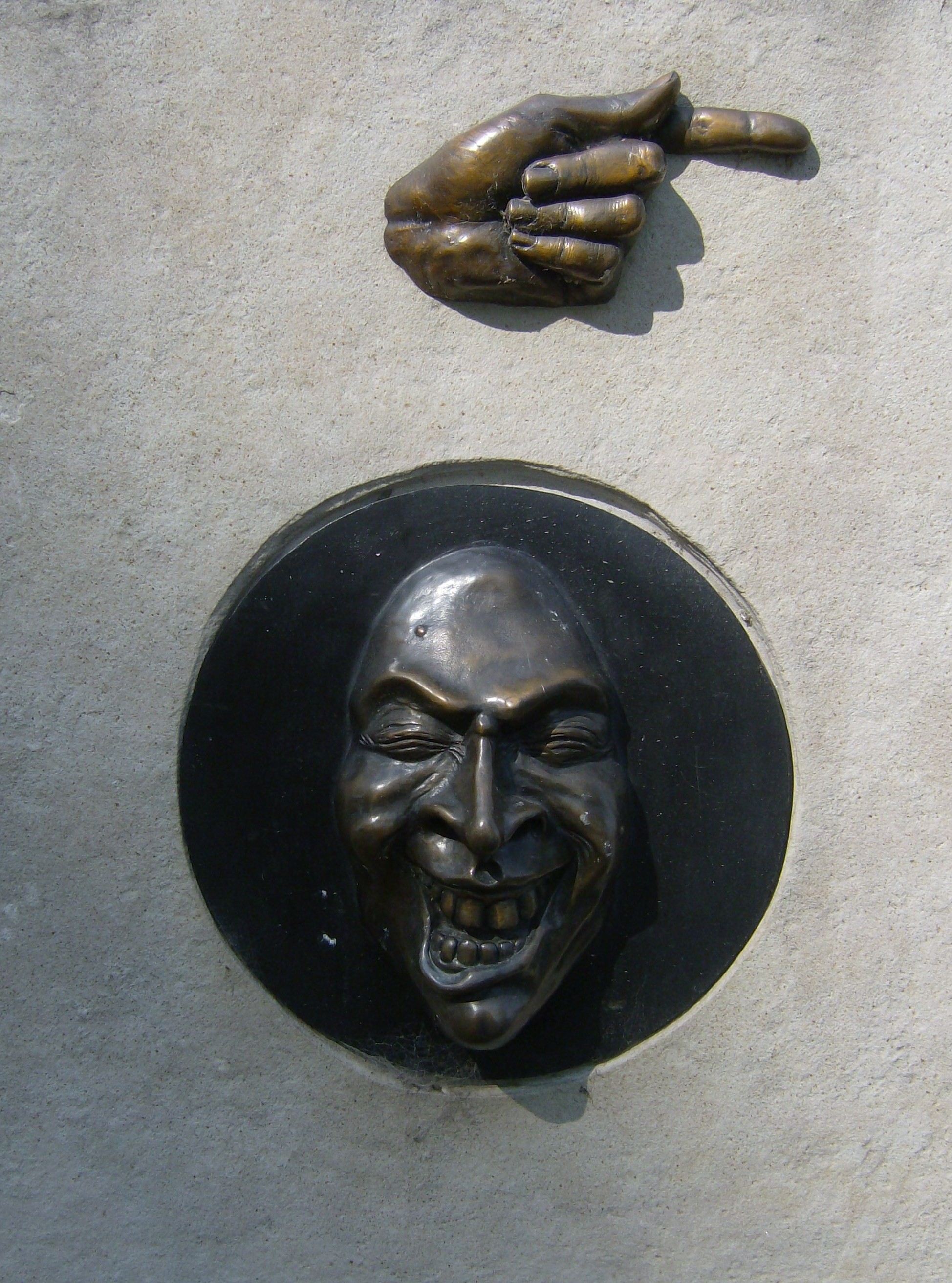
Press Conference
“After a few adjustments we are proud to unveil the
Municipal Monument. As you know,” the
Mayor brightly assured us, her hot pink blazer glowing in the noon sun. “As you know, we wanted to give as many local
Artists as possible the opportunity to contribute to the Monument. It is a
tribute to our diverse populace, friendly to all.”
I turned to interview one of the contributors, a musky heap
of burlap in huaraches, who chuckled, “Yeah, I started a great nude diving into
the wall, but they made me change it into a hand. Yeah, that’s me below.”
This week's entry into Friday Fictioneers isn't terribly inspired, but it will do. Sometime's it's just like that, you know? Please join us!
Just Like Candy!
“Oh, Sweetie, know what you can do with those? You can stack them just like this –“ She began rolling the towels into logs and
inserting them into the closet according to hue. “And then we’ll go out here—“ she clomped out
into the living room in her cherry-red high heels, thrusting her rear out as
she bent from the waist in a calendar-girl pose. “—and fan out
these magazines in an in-VI-ting array!”
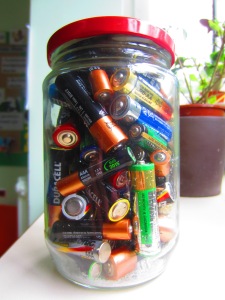
“But the old batteries in a jar?” I folded my arms into my sweatshirt - Oscar to her Felix.
UPDATE: Well, guess what I saw last night? Alec Guiness in *The Horse's Mouth,* about a quirky artist. It's kind of a comedy, in that dark sophisticated 1950's/1960's way, with some definite madcap shenanigans (destruction of a beautiful apartment in the name of "art"). But what's applicable to this discussion is one point when the artist regards a mural he's just painted, for which he had all kinds of vision--the raising of Lazarus--and he says something like, "Well, that's not what I had in mind at all." Where was the problem? In the Idea, in the Energy, in the Power? Here's a link to the movie on Amazon Instant Video: http://www.amazon.com/gp/product/B00A5IZHDC?ie=UTF8&ref=oce_digital 11-17-12 ----------------
I'm a little discouraged that my last week's post is pretty lonesome, that I'm just talking to myself. [Update: I realize I didn't leave my proper link to last week's post on Cindy R.'s last week's post! That's fixed now. How embarrassing.]
But to get ahead of myself, Sayers would say I'm a blogger whether anyone's reading my blog or not, or even, praise God, whether I get my blog post written or not! (See p. 42.) In any case, I'll plug along. I sometimes feel I can hold on to an idea only long enough to make a quick comment before my I.Q. plunges again. Maybe it's my age. In any case, this is another installment in the ongoing project of Ordo-Amoris. Sayers tells us that God, complete unto Himself as the "well-spring" is not manifest without a creature to witness the Creation. Makes me think, "If a tree falls in a forest and no one hears it, does it make a sound?" That circles back to the poet idea above, from p. 42. God is Creator eternally, even before we had a Creation. p. 35: "Those who [in disputing about God strive to transcend the whole creation] are more mischievously and emptily vain than their fellows." (Augustine) p. 36 Mathematicians and artists have a way of seeing things that allows them to get outside their environments far enough to be able to describe them (dimensions and things). p. 39 Sayers says that a work is always consistent with its nature. In the power, though, what do we do with the critical theory of our time--well, of the last century--that says the work exists unto itself, or only in the mind of the reader, never mind what the author intends? She talks a lot about how the works exist in the mind of the writer as whole beings well before they begin to be made manifest in the Energy/Activity. But I have experienced having a germ of an idea and then seeing where it might be going as I develop it in writing. I've read of many novelists working that way, too. Would Sayers say they just didn't know everything that was already in their heads before they got it out? She also says, though, on p. 40, that we must have the Energy/Activity in order to have the idea known to others AND OURSELVES. If it already exists in the mind, why must it have expression on paper in order to exist? Or is the Energy manifest in our minds before the translation of words on paper? I get the feeling she's pushing her analogy too far in both directions by changing "Energy" to "Activity" and thus making it more practical and concrete AND saying Power "proceeds from the Idea and the Energy together," very credal language. I feel like my daughter the day she set one foot into a canoe and left the other on the dock and soon fell in the water--the things are drifting apart. p. 42 IS a poet still a poet if he has no way to express his poetry? What makes a poet? p. 43 I don't like the disdain of "men of science." If they don't behave this way, if they're renaissance men, are they "really" poets, then and not scientists? On p. 44, she sets forth the idea that science depends on progress, the idea that we're always building and improving, but that art recognizes single geniuses in every age, whose work cannot be progressed beyond or built upon but only added to by later geniuses. But my husband Glenn did a great paper and talk on Benjamin Franklin a couple of years ago, making the case that he was one of those singular geniuses who had amazing expertise in multiple fields (statesmanship as well as science, for example). Some researcher whose name escapes me has shown how geniuses of different times stack up to one another by virtue of their prominence in their own time and our recognition of them in later time. So Galileo is one, and Newton, and some others. But Benjamin Franklin is a rare genius who "has it all." Would Sayers say he's risen above his being a scientist to become a poet, ultimately? Here's the video of Glenn's talk. :-) I feel cranky in my response to Sayers, pressured to finish this chapter when I didn't feel like it, really. Sorry about that! :-)
Tardy, I sigh. But I will post nonetheless and hope to get ahead of this week's game this afternoon. We will see. This is an ongoing project of Ordo Amoris. Please join us!
In Chapter 2 of The Mind of the Maker, Dorothy Sayers explores "The Image of God" and helps us to see how our comfort with the idea of God as Father should extend to comfort with the idea of God as Creator, the ideal of how He does these things helping inform how we should do them.
The quote from Aquinas at the front of the chapter, saying that the things we compare God to are rooted more in Him than in the things, reminds me of Platonism, our search for the ideal beyond ourselves. When we experience something here that seems "just perfect," it is simply that our imaginations haven't taken us as far as they might, if the material world can still satisfy them, even briefly. I watched a fascinating video clip the other day, linked on Facebook by Sarah Hempel Irani, a local sculptor. It is below, and it explains how Greek sculpture progressed to the ideal human image and then beyond, to the level of impossibility. It's fascinating!
On p. 21 in my edition, she says, "The Jews, keenly alive to the perils of pictorial metaphor, forbade the representation . . . ", but isn't it God, rather, who forbade, keenly alive to the perils for man?
P. 24 she notes that in science and math only formulae can avoid analogies, and she does a beautiful job explaining the problem with the wave/particle way of describing light.
P. 25 -- God as Father doesn't beget as men do. This made me think deeply about the reality that men might think they are begetting when they make love to their wives, bed a slut or prostitute, or even rape a girl -- but God controls the issue! The man may think he's creating, bending the future to his will, but God controls all of that ultimately. "who -- not of blood nor of a will of flesh, nor of a will of man but -- of God were begotten." (Young's Literal Translation)
P. 27 "We extend [the concept of a creator God] to the concept of a maker who can make something out of nothing; we limit it to exclude the concept of employing material tools." I love how Sayers helps me understand philosophical concepts. Then on p. 28, "We spend our lives putting matter together in new patterns and so "creating" forms which were not there before." Cooking does that! Fusion cuisine -- it's all fusion!
Finally, on p. 31, she says that "It is now [after three centuries of analytic bias] very difficult for the artist to speak the language of the theologian or the scientist the language of either. . . . [T]he human mind is once more beginning to move towards a synthesis of experience." Hmmm. Is that what all the "smells and bells" in emergent/emerging (I get them mixed up!) worship is all about? Is that why we lament that we don't have any great Christian writers and artists just now--we're still working our way toward that synthesis? Will or do the conservative synods, presbyteries, and other bodies of ruling theologians allow for or welcome artistic expression of theological truths? How far can those be "embodied" to remain orthodox, how far can we take them in worship? We have used the poems/prayers from Puritans, *Valley of Vision,* in worship in years gone by -- does Wendell Berry qualify? Your favorite writer? HUGE questions here.
Here's a little 100-word piece I made NOT for Friday Fictioneers, but for a collection the first hostess of FF, Madison Woods, is putting together--100 stories of 100 words based on the photo below. Obviously it refers to a November Wednesday another year, but still . . .
In the chilly silence when I went out for the paper it
wasn’t there. So dark—great banks of clouds
holding back the dawn.
Only later did I hear the thrum of tires, click of gears,
and thump as the paperboy on his bike flung it into the yard. It won’t have the
news we all stayed up late to hear this morning. And it’s still not decided.
They’ll count and bluster and hold press conferences and file lawsuits.
But the clouds have
lifted with the sun, and there it is at last. Another day.
First things first--congratulations to Jen / Elmowrites on her great creative act of the week--baby Sebastian!
I missed Friday Fictioneers last week, but at the first glimpse of this week's photo an image formed in my mind, and ten minutes or so later, I had this:
Castle
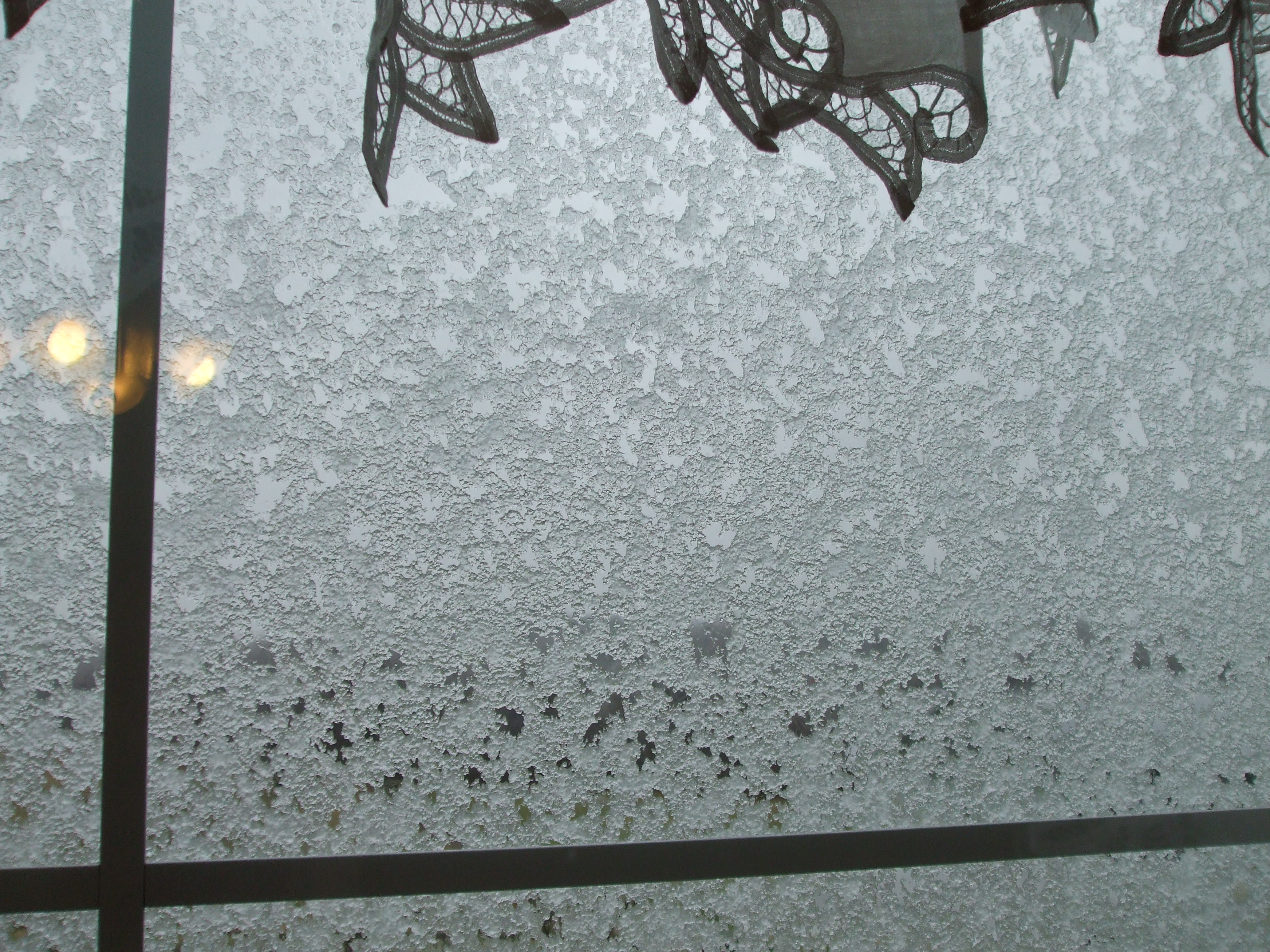
Rosemarie must put her hand up against the wet pane—it drew
her to take measure of her enclosure. Last
night she had basked in the yellow glow of the room, safe from the black
outside. Then the patter of sleet, then the almost inaudible exhale of snow
gathered on the window as she slept. At dawn the light was muted, grayed down,
and with a catch of breath she untangled herself from the bed and set one foot
to the cold tile, leaning across the space to the window. Her curls caught in the starched lace of the
curtain.
100 words
Please jump in and join us if you like. I really enjoy this part of my week!