Many things have kept me from this blog for months, but we can all use something new for the New Year. Sometimes that can be a little something to freshen up our academic pursuits, and to encourage that I want to offer a bonus.
It begins with a reward--all existing clients will have 1000 words added to their current evaluation accounts, and those enrolled in courses with Writing Assessment Services can use the bonus for additional exercises within the course or for another kind of writing of their choice. For new clients it's a little incentive to go ahead and sign up for that new evaluation account or a Progymnasmata Tutorial to freshen up your school year.
I am happy to announce that I now have, courtesy of the good folks at the Association of Classical and Christian Schools, a permanent home for a great article written by Amy Kim, "Pro-gym-nas-what?!..." In this piece she details how we worked on the Progymnasmata together in my consulting relationship with The Oaks, a classical Christian school in Spokane, Washington, and how she's implemented these great writing exercises in her classroom over the years. Please find this article on my home page, at Writing Assessment Services.
Showing posts with label progymnasmata. Show all posts
Showing posts with label progymnasmata. Show all posts
Thursday, December 26, 2013


Friday, October 26, 2012
The Progymnasmata and The Modern Essay
Early this morning I wrote a response to a client wondering how to "sell" the Progymnasmata to parents interested in preparing their students to write "modern essays." Below, in its email-y roughness but edited a bit for this post, is my response to her:
I have been very pleased that the Progymnasmata actually turn into some modern essay types with a bit of stylistic spin (and sometimes without it). For example, Frank D'Angelo (Composition in the Classical Tradition) uses a modern magazine essay, a eulogy or remembrance of Ralph Ellison, as an example of encomium/praise, and it's amazing to me how much the magazine piece follows the classic form.
Ultimately a student is supposed to use the smaller tools of the Progymnasmata in any way his rhetorical needs call for, and a student who can rattle off a quick proverb amplification knows just what to do when a typical quote-based SAT prompt comes around. The typical modern essay calls for perhaps definition (easy to use the amplification principles of proverb and anecdote to explore that), description (the principles if not the form of the classic exercise are appropriate here), comparison (there's a Progym for that, though more focused than the generic essay needs), thesis-support, and so forth. I think the speech-in-character is beautifully brilliant for a creative spin on a book report. Any student who can do what the Progym call for is well equipped to do high-level college essay writing, though some practice with the usual forms is not a bad idea, so students can make the leap.
I'm currently about to finish the book Racing Odysseus: A College President Becomes a Freshman Again, about a college president (not really a scholar but an administrator) who takes a sabbatical to go to St. John's College, the Great Books college in Maryland. He explains that St. Johns students go from the very old-fashioned, literally antiquated, Great Books curriculum there into all manner of jobs and graduate programs, including in the sciences, medicine, and so forth. I can see how they could, though I want to talk to my husband, a physics professor, about that. :-) In my experience the students who have done well in the Progym are over-prepared for whatever college writing will bring to them. Dorothy Sayers says in "The Lost Tools of Learning" that deep study of any one discipline can teach one how to study any other, and thus she champions Latin as the gateway to all learning. Memoria Press is grabbing hold of that principle in its curriculum, though I'm a little wary of it for those interested in the sciences and math.
For the modern essay as most of us know it, I can recommend Lucile Vaughan Payne's classic The Lively Art of Writing (Mentor Series)

I was dubious when Veritas Press Scholars Academy wanted me to use it for the Composition II course I developed (with a co-teacher and friend), but I'm in my third year of working with it and think Payne has some great principles for students needing to learn how to build a thesis-support essay. The instruction in this cheap little book (or portions of it) could be of great use as a supplement to the Progymnasmata.
How's that for a pep talk?
Friday, July 20, 2012
Imitation on a Small Scale
One of the best website designs I have ever seen is the very orderly Silva Rhetoricae, which organizes "the forest of rhetoric" into its "trees" and "flowers." If you go to the site and search for the term "imitation," you'll get a brief history of this amazing teaching tool in the first link. But beware--you can get lost in this enchanted forest!

As explained in the little article linked above, imitation can be used on a grand scale or a small one. Today I want to share a brief exercise from the first quarter of the course Composition II that Chris Finnegan and I developed for Veritas Press Scholars Academy two years ago. After discussing a larger portion of an essay by Theodore Dalrymple, "Sympathy Deformed," we focused in on this pair of sentences:
Sympathize = honorable, decent
Self-sympathize = unadmirable, unattractive
In logic this comes out as S = P, Not S = Not P. In class we discuss simple examples like "kindness is good" and "unkindness is bad" to be sure everyone gets the core of the meaning. Then we set them loose with an imitation exercise using Dalrymple's sentence structure (and double description). Here are a few of the student examples:
As explained in the little article linked above, imitation can be used on a grand scale or a small one. Today I want to share a brief exercise from the first quarter of the course Composition II that Chris Finnegan and I developed for Veritas Press Scholars Academy two years ago. After discussing a larger portion of an essay by Theodore Dalrymple, "Sympathy Deformed," we focused in on this pair of sentences:
To sympathize with those who are less fortunate is honorable and decent. A man able to commiserate only with himself would surely be neither admirable nor attractive.When we want to imitate something like this, we need first to understand it, and for many a kind of shorthand can help:
Sympathize = honorable, decent
Self-sympathize = unadmirable, unattractive
In logic this comes out as S = P, Not S = Not P. In class we discuss simple examples like "kindness is good" and "unkindness is bad" to be sure everyone gets the core of the meaning. Then we set them loose with an imitation exercise using Dalrymple's sentence structure (and double description). Here are a few of the student examples:
- Peace promotes both happiness and patience. War promotes neither contentment nor fortitude. (Rob Holzknecht) This very simple one follows the basic rules well and illustrates the principle.
- When a person's emotions are controlled, all those around him will have peace, but when his temper consumes him, there is no calm for anyone. (H.K.) This has more personal application and makes us nod and say, "Yes, that's very true." It's reminiscent of the "better a corner of the housetop" Proverbs 21:9 and 25:24.
- The ardent flames of love melt away the harsh ice of terror, leaving only comfort for those in the midst of the passionate fire. A man with no love to detect in his soul is never to feel true tranquility, but will forever remain frozen in hatred’s cold grasp. (Aubrey Muffett) Fire and ice -- obvious contrasts that help to illustrate the point, though we have to buy into the writer's equation of fire with a kind of comfortable, passionate tranquility. I expect this student was reading Dante in another class. :-)
- To have self-control is to have a chest full of gold. A man who can only fume and yell is like the beggar who, despite his cries for money and food, receives none. (J.G.) This one has concrete images (and sounds). Note that the first sentence is quite brief and powerful. The second illustrates futility even in the length and syntax, with that final "receives none" to clinch the deal.
Want to give it a try yourself?
Friday, July 13, 2012
Setting the Stage for Argument
When students have to argue in their writing, they often do it adamantly, plainly, without persuasive subtlety. But an argument essay works best when the writer can draw the reader along, a friendly arm about the shoulder, persuading the reader to agree with him on minor points until suddenly they find themselves together at the writer's conclusion, and it all seems so obvious. At least that's the hope.
In the Progymnasma called "Confirmation/Refutation," a writer works through a set form of argument, examining the possibility, probability, credibility, and other characteristics of a proposition. The exercise gives students a chance to investigate or promulgate an urban myth, pet theory, or historical dilemma of their choice. In the Intermediate level of my Progymnasmata Tutorial I provide my own investigation into George Washington's wooden dentures. This summer one student decided to look into the claim of Herodotus, and later others, that Helen was never in Troy during the decade-long siege of Homer's epic.
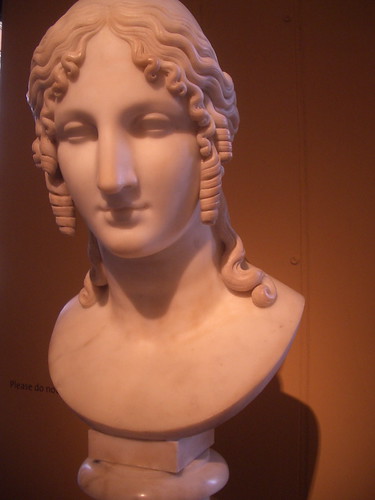
In the Age of Reason, everything was most unreasonably thrown into uncertainty, with Descartes setting out to “doubt everything,” and the chronological snobbery so characteristic of Modernity automatically casting every fact from the ancient and Medieval worlds into suspicion. When men were unsure of their own existence, it is no surprise that they also doubted the veracity of Homer. John Stuart Mill, reflecting the temperament of his age, referred to the “alleged siege of Troy,” in his The Subjection of Women. Earlier, Blaise Pascal wrote that “Homer wrote a romance, for nobody supposes that Troy and Agamemnon existed any more than the apples of the Hesperides. He had no intention to write history, but only to amuse us,” (Pensées, part ix, §628). For them, Helen was not only not in Troy, but neither she nor Troy had ever existed.A greener student might have argued something simple, like this:
In the 17th century Descartes argued that Helen was not in Troy, and John Stuart Mill questioned the whole story, calling it the "alleged siege of Troy." Others agreed. So great minds of a few centuries ago doubted whether Helen was in Troy or even existed. But even though they doubt the story, that does not make it false.Note how this "greener" version just puts the facts out there plainly, showing us only that people disagree, and some of those people famous smart ones. The final declaration, typical of a young writer, relies on the declaration that the existence of an opposition does not prove that opposition. That's a pretty thin argument.
But look at what Michael does in presenting this material. He uses "unreasonably thrown into uncertainty" and "chronological snobbery . . . automatically . . . casting every fact . . . into suspicion." Note the negative constructions, the twist of criticism, the accusation of narrowmindedness! This last would be especially appealing to today's reader, even if he is himself a purveyor of chronological snobbery.
Even more effective, note his explanation of the mindset of Descartes and Mill, "men unsure of their own existence." Instead of dismissing these big names with reference only to their conclusions, he quotes them, letting them speak for themselves. And of course a man unsure of his own existence would be even more unsure of the existence of a woman or a city a couple of millennia before!
By presenting his opposition with interpretations of their mindset and culture, by quoting them directly to let them speak for themselves, Mr. Helvey shows true command of his material, demonstrates his deep understanding, and helping us trust him for the conclusions that are to come.
Friday, June 10, 2011
Discounts for Summer!
Register for a course or evaluation account at Writing Assessment Services by August 1 and enjoy a 20% discount! I am free to work with students over the summer, too--get a jump start on your school year!
Ask yourself about your home school or even your own writing goals . . .
Do we want to get started in the fundamentals of rhetoric to improve writing, practicing skills as basic as writing a narrative or discussing the meaning of a proverb, or as complex as comparing two heroes or villains or arguing before a legislative body? Take a look at Proymnasmata Tutorials, Beginning to Advanced.
Do we want a way to enter The Great Conversation by writing about the Great Books we're reading? Consider your own customized course from among over thirty assignments in Great Books Writing Workshop.
Do we want to experiment with sophisticated writing tasks modeled on the work of writers/speakers like Cicero and Sojourner Truth, Thomas Aquinas and Ernest Hemingway? Browse the Gregory Roper text, The Writer's Workshop, and the course Apprenticeship Writing Workshop.
Do we want a way to get feedback on the things we're writing in our curriculum through the school year, making history and literature and even science essays become part of a robust writing program? Or are we registered for an online tutorial that does not provide feedback for the essays submitted? Enroll in an Evaluation Account and let me serve you according to your individual needs.
Finally, do we just want access to a lot of great writing material so that we can create our own course of study and evaluate it ourselves? Register for a Resource Membership in any of the courses offered by Writing Assessment Services.
Visit the website, drop me a line, and let's see how I can help!
Ask yourself about your home school or even your own writing goals . . .
Do we want to get started in the fundamentals of rhetoric to improve writing, practicing skills as basic as writing a narrative or discussing the meaning of a proverb, or as complex as comparing two heroes or villains or arguing before a legislative body? Take a look at Proymnasmata Tutorials, Beginning to Advanced.
Do we want a way to enter The Great Conversation by writing about the Great Books we're reading? Consider your own customized course from among over thirty assignments in Great Books Writing Workshop.
Do we want to experiment with sophisticated writing tasks modeled on the work of writers/speakers like Cicero and Sojourner Truth, Thomas Aquinas and Ernest Hemingway? Browse the Gregory Roper text, The Writer's Workshop, and the course Apprenticeship Writing Workshop.
Do we want a way to get feedback on the things we're writing in our curriculum through the school year, making history and literature and even science essays become part of a robust writing program? Or are we registered for an online tutorial that does not provide feedback for the essays submitted? Enroll in an Evaluation Account and let me serve you according to your individual needs.
Finally, do we just want access to a lot of great writing material so that we can create our own course of study and evaluate it ourselves? Register for a Resource Membership in any of the courses offered by Writing Assessment Services.
Visit the website, drop me a line, and let's see how I can help!
Thursday, February 17, 2011
Article on Teaching/Learning the Progymnasmata
Hot off the presses, the Spring 2011 issue of Classis, the journal of the Association of Classical and Christian Schools. It's a great issue all around, with the theme "Words and Writing," but I am honored to have my Progymnasmata instruction mentioned in the piece by Amy Kim, "Pro-gym-nas-what? . . ." A couple of years ago I helped develop the writing curriculum for Amy's school in Spokane, Washington, The Oaks: A Classical Christian Academy.
Thursday, February 10, 2011
Successful Student!
Boy, it's dusty in here, mostly because I've been working on other things, like teaching eighty students online six hours two days a week. Yeah, and homeschooling a seventh grader. One day I want to write more, like a former student who took my Progymnasmata course just to get some writing practice and consider whether she might want to teach high school writing. But then Lisa Ohlen Harris decided she just wanted to write, and look here!
Author Will Vie for an Oregon Book Award
Author Will Vie for an Oregon Book Award
Wednesday, July 14, 2010
New Offerings at Writing Assessment Services
I've just been working on my website for Writing Assessment Services and have some new things to announce:
Online course areas at CRTeacher.com combine previous courses to give you more flexibility.
My Composition 2 course with Veritas Press Scholars Academy online still has a few seats left in one section--enroll soon!
Please stop by Writing Assessment Services today and see how I can help as you plan your new school year!
Online course areas at CRTeacher.com combine previous courses to give you more flexibility.
- Great Books Writing Workshop has over thirty assignments to choose from, from antiquity to modernity.
- Progymnasmata Tutorials include all levels for more choices, plus all three of my workbooks.
- Apprenticeship Writing Workshop has both levels together.
- All of these courses include robust files of evaluated student samples of the work and discussion forums for students and parents to ask questions and share their work.
My Composition 2 course with Veritas Press Scholars Academy online still has a few seats left in one section--enroll soon!
Please stop by Writing Assessment Services today and see how I can help as you plan your new school year!
Monday, March 8, 2010
Writing About a Painting
One of my favorite assignments is a variation on "Description," in the Intermediate level of my Progymnasmata Tutorial series. I present it this way, after suggesting two other paintings (students are welcome to choose their own as well):
Now describe one of these paintings, or a character in the painting, in such a way as to illuminate the painting or the character so that a casual observer takes a second and third look. You may limit yourself to just the information given by the painting itself, or bring in things you know about Wycliffe, for instance, or about the history of the boat painting. Limit your work to under 300 words.
Today I enjoyed one student's response that I want to share with you. Kiernan Presler-Marshall, grade 8, chose the painting "The Polar Sea," by Caspar David Friedrich, reproduced above. His description makes excellent use of language in many ways, and though it could use another polish, it's worthy to post here as is:
Sheets of ice, sharp and cold as the executioner's ax, rise into the sky, stabbing for the heavens. With a grinding crunch, these two icy monsters collide, shattering with force and throwing slivers high into the air. The ice raises itself above its kingdom, stabbing like knives into the sky.
As far as the eye can see, the land is a freezing desert, windswept and empty. Nothing moves, but for the snow which blasts by like an icy sandstorm. The world is bathed in silence, save for the shrieking of the wind as it winds its way around the icy towers. With nothing to slow it, it speeds up incredibly, throwing snow to the sky and forcing everything to bow before it. The clouds above have been shredded into rags by the wind. They split to reveal the sun, though it does nothing to melt the wastes of ice. If anything, it makes them more forlorn, a place which not even the sun can warm. On the horizon, if that is what it is called in a place where distances have no meaning, mountains of ice rear from the wastes like primeval monsters, quickly frozen as they awoke from their slumber.
The ship, sturdy as it was, could not stand the force of the crushing ice, Becoming part of the ice sheet which was its doom. Splintered spars of wood litter the ice, silent grave markers for the men who once sailed the seas in the now deceased ship. The crew of the ship, once brave explorers, are now frozen into the ice which ended their journey. Together they will rest through the ages, waiting, always waiting.....
----277 words
Wednesday, October 14, 2009
A Review in *The Old Schoolhouse* Magazine
Quite a while ago I sent a copy of my Progym: Classical Writing Workouts--Narrative to Heidi Shaw of The Old Schoolhouse homeschooling magazine, and she's just let me know that the review is posted.
The specifics of additional services have changed since the version she saw, but the work is substantially the same, one of the three types of exercises taught in my Progymnasmata Tutorial: Beginning, a six-week course many students enjoy each year.
So take a look! Click here.
The specifics of additional services have changed since the version she saw, but the work is substantially the same, one of the three types of exercises taught in my Progymnasmata Tutorial: Beginning, a six-week course many students enjoy each year.
So take a look! Click here.
Thursday, November 6, 2008
Argument: The Wisdom of Proverbs
In the Progymnasmata exercise Proverb Amplification students are asked to consider carefully the meaning of a particular proverb and go through a series of development points to explain it. In a follow-up assignment, I ask Tutorial students to argue for or against a particular medical or health proverb, like "An apple a day . . ." or "Early to bed . . ." This is a popular one:
A good surgeon must have an eagle's eye, a lion's heart, and a lady's hand.
Most agree with this proverb and do a decent job explaining its wisdom. But then I throw in an additional assignment with a twist: argue the opposite.
The best students should be challenged to argue against their own points. This does not develop hypocrisy but humility, logic, and empathy. For example, a student could argue first that the proverb about the surgeon's qualities is certainly true--he needs skill, courage, and delicacy. But there is an amelioration of each of these: sometimes good sense or the use of good tools can take over and get a better result than detailed knowledge of the minute or perfect eyesight; sometimes courage can become arrogance and needs to be tempered with humility; and sometimes a decisive, radical action is needed to save a patient, rather than a slow gentleness that allows life to ebb away. So in a way one could argue that wisdom and decisiveness overcome perfect coordination and a conservative approach.
In any meaningful argument we should fully understand the other side--in part to sympathize with our opponents even if we hold our own line, and in part to strategize the best arguments for our own side.
A good surgeon must have an eagle's eye, a lion's heart, and a lady's hand.
Most agree with this proverb and do a decent job explaining its wisdom. But then I throw in an additional assignment with a twist: argue the opposite.
The best students should be challenged to argue against their own points. This does not develop hypocrisy but humility, logic, and empathy. For example, a student could argue first that the proverb about the surgeon's qualities is certainly true--he needs skill, courage, and delicacy. But there is an amelioration of each of these: sometimes good sense or the use of good tools can take over and get a better result than detailed knowledge of the minute or perfect eyesight; sometimes courage can become arrogance and needs to be tempered with humility; and sometimes a decisive, radical action is needed to save a patient, rather than a slow gentleness that allows life to ebb away. So in a way one could argue that wisdom and decisiveness overcome perfect coordination and a conservative approach.
In any meaningful argument we should fully understand the other side--in part to sympathize with our opponents even if we hold our own line, and in part to strategize the best arguments for our own side.
Monday, October 6, 2008
Lovely Quote
From Geraldine Brooks's Year of Wonders, a novel about plague in 17th-Century central England. Beautifully written but heartbreaking and "difficult." The first two sentences have a lovely image, but the whole of the paragraph is worthy, too, giving us a snapshot description of the village that is the focus of the whole novel:
Our village is a thin thread of dwellings, unspooling east and west of the church. The main road frays here and there into a few narrower paths that lead to the mill, to Bradford Hall, the larger farms, and the lonelier crofts. We have always built here with what we have to hand, so our walls are hewn of the common gray stone and the roofs thatched with heather. Behind the cottages on either side of the road lie tilled fields and grazing commons, but these end abruptly in a sudden rise or fall of ground: the looming Edge to the north of us, its sheer stone face sharply marking the end of settled land and the beginning of the moors, and to the south, the swift, deep dip of the Dale. (p. 11)
Saturday, September 6, 2008
A Good Assignment--Imitating a Narrative
This Progymnasmata Narrative assignment includes several exercises you can . . . well, imitate . . . to work with a narrative. This version is from my Great Books Writing Workshop: Modernity.
From Greenmantle, by John Buchan, 1916
Hertfordshire, United Kingdom: Wordsworth Editions Limited, 1994
The introduction to this edition notes that “John Buchan wrote this swashbuckling tale of high adventure between February and June 1916 when serving as a Major in the Intelligence Corps in France during the First World War.” The hero of the tale, Richard Hannay, is sent as a spy on behalf of Great Britain to uncover and foil a plot by the Germans“to invoke a Jihad or Holy War amongst Muslims in the Near East against the British.” In this selection, a little over halfway through the novel, Richard Hannay and his companion Peter are on horseback, finding their way through pitch darkness in a land unfamiliar to Richard. Though it is a narrative, the piece shows how a narrative can create an overall atmosphere or description. Each step through the darkness emphasizes how dark it really is.
We had to trust to Peter’s instinct. I asked him where our line lay, and he sat very still for a minute sniffing the air. Then he pointed the direction. It wasn’t what I would have taken myself, but on a point like that he was pretty near infallible.
Presently we came to a long slope which cheered me. But at the top there was no light visible anywhere—only a black void like the inside of a shell. As I stared into the gloom it seemed to me that there were patches of deeper darkness that might be woods.
“There is a house half-left in front of us,” said Peter.
I peered till my eyes ached and saw nothing.
“Well, for Heaven’s sake, guide me to it,” I said, and with Peter in front we set off down the hill.
It was a wild journey, for darkness clung as close to us as a vest. Twice we stepped into patches of bog, and once my horse saved himself by a hair from going forward into a gravel pit. We got tangled up in strands of wire, and often found ourselves rubbing our noses against tree trunks. Several times I had to get down and make a gap in barricades of loose stones. But after a ridiculous amount of slipping and stumbling we finally struck what seemed the level of a road, and a piece of special darkness in front which turned out to be a high wall.
I argued that all mortal walls had doors, so we set to groping along it, and presently found a gap. There was an old iron gate on broken hinges, which we easily pushed open, and found ourselves on a back path to some house. It was clearly disused, for masses of rotting leaves covered it, and by the feel of it underfoot it was grassgrown.
We were dismounted now, leading our horses, and after about fifty yards the path ceased and came out on a well-made carriage drive. So, at least, we guessed, for the place was as black as pitch. Evidently the house couldn’t be far off, but in which direction I hadn’t a notion.
(pp. 132-133; 364 words )
Warm-up
Answer the journalist’s or even military intelligence reporter’s questions about this narrative.
Who? What? When? Where? Why? How?
Condense the 364 words of the main narrative to about 100-150 words. Think about getting “just the facts” for an intelligence report.
Submit your version as “Part 1—Condensed”
Aerobic
Expand the narrative again to a solid 250 words from your condensed version, without looking at Buchan’s original, and create your own details to convey that sense of darkness Richard Hannay reports.
Submit your version as “Part 2—Expanded”
Anaerobic (Optional)
Create a similar narrative to Buchan’s to convey in a series of events a pervading impression. Below are some suggestions to get you started, but try to create something original if you can. Use about 250-300 words.
- Enter a familiar room occupied by people of longstanding habits and find something that’s just out of place, something wrong in the atmosphere. Use details in the room, discovered over time as you look around or walk around, to convey that feeling. This is a great opportunity to use the comparative mode: instead of…although…
- Tell how a young person discovers bit by bit in a particular interaction that another person is in love with him or her.
- Trace the excitement or dread of a journey (like the one above), as the traveler gets closer and closer to the destination.
Thursday, August 21, 2008
Beg, Borrow, or Steal
While I'm busy planning the school year for my children and my clients, I offer a little something from a friend . . . "Writing As a Craft."
Thanks, Chris!
Thanks, Chris!
Monday, July 21, 2008
Mini Review of *The Complete Writer: Writing With Ease* by Susan Wise Bauer
Renee Mathis pointed me in the direction of Susan Wise Bauer's new book series, The Complete Writer: Writing With Ease Instructor Text. Visit that link and read the sample pages from the chapters "Why Writing Fails" and "The Three Stages." I agree quite a bit with SWB, though she advocates saving the Progymnasmata (see my own web site for that :-) ) for the last years of high school, treating them as advanced tools to be used when the student has a good understanding of how to use them. I believe the Progymnasmata can be introduced in the elementary years in a small way and worked on as profitable exercises in themselves in middle school. So that's how I use them. But I think her overall observations of the state of student (college) writing today match my own, and I think her prescription is a good way to deal with the problem. I intend to use some of her ideas with my youngest, entering fifth grade this year.
So check it out--see what you think--and let me know! :-)
So check it out--see what you think--and let me know! :-)
Monday, June 30, 2008
Can We Do Better?
I think one of the best uses of history is to help us look at ourselves in comparison. Consider this self-characterization by an Athenian citizen in ancient days:
--"Pericles Extols the Virtues of Athenian Culture. From the funeral oration of Pericles, as reported in Thucydides, The Peloponnesian War, 2.40, trans. by Duane Garrett." From my Archaeological Study Bible, commentary on the sidebar to Acts 17-18.
We love beauty with simplicity, and we love the pursuit of knowledge without effeminacy. We employ wealth properly, for use rather than for noisy display, and we do not consider poverty to be a disgrace but do regard it as shameful for someone not to seek to escape poverty through labor. We citizens of Athens care for both our own domestic concerns and for the affairs of state; those of us engaged in business are not lacking in understanding of public matters. For we alone consider those who avoid engagement in public affairs not as "uninvolved" but as useless. And we, as we judge and reflect carefully on matters, do not consider words to be a hindrance to actions. Rather, the real hindrance to action is to enter into whatever must be done without taking forewarning through discussion.
--"Pericles Extols the Virtues of Athenian Culture. From the funeral oration of Pericles, as reported in Thucydides, The Peloponnesian War, 2.40, trans. by Duane Garrett." From my Archaeological Study Bible, commentary on the sidebar to Acts 17-18.
[Apollos] vigorously refuted the Jews in public debate, proving from the Scriptures that Jesus was the Christ. --Acts 18:28
Tuesday, June 10, 2008
A Lesson in Rhetoric
Our culture surrounds us with rhetoric, and The Story of Stuff is full of it! A charming cartoon, with an earnest narrator and a lot of truth, this twenty-minute sermon contains all manner of material for students of logic and rhetoric. The site includes a transcript for those who would like to really dig in with research--I think a student of Modernity could do a valuable series of research papers and rhetorical analysis papers based on this presentation through the course of a whole school year!
If that's too much with everything else on your plate, just enjoy it. If you're suspicious of some of the claims, good for you--consider how the presentation is steering you to agree. If you are filled with satisfying joy that at last the truth is out, good for you--but consider how the presentation is steering you to congratulate yourself for holding a proper opinion. There's something for everybody! :-)
Thanks to Get Rich Slowly for the link.
If that's too much with everything else on your plate, just enjoy it. If you're suspicious of some of the claims, good for you--consider how the presentation is steering you to agree. If you are filled with satisfying joy that at last the truth is out, good for you--but consider how the presentation is steering you to congratulate yourself for holding a proper opinion. There's something for everybody! :-)
Thanks to Get Rich Slowly for the link.
Thursday, May 29, 2008
Progymnasmata: Anecdote from Shakespeare
In my course Great Books Writing Workshop: Christendom the students are writing essays about Shakespeare's Henry V this month. This student, J.D., chose to do the Progymnasmata exercise "Anecdote Amplification," which has a particular structure prescribed for it. (Explore the topic at my web site.) J. does a nice job with a very small side note in the play, and I present this essay as an example of what a clean, clear little essay can look like. Enjoy!
(Posted as-is, without correction, and I wish it had a title. Titles are great.)
(Posted as-is, without correction, and I wish it had a title. Titles are great.)
In the midst of an army camp sat a young boy. With the impending
doom of a battle of unfair numbers, he makes a speech about his pick-
pocketing companions saying: "They would have me as familiar with
men's pockets as their gloves or their handkerchiefs: which makes
much against my manhood, if I should take from another's pocket to
put into mine; for it is plain pocketing up of wrongs. I must leave
them, and seek some better service: their villainy goes against my
weak stomach, and therefore I must cast it up."
Although a nameless character in Shakespeare's King Henry V, Boy
shows a maturity beyond his age when he seeks a more ethical group
of people to surround himself with. Even as a young boy, Boy
recognized that bad company corrupts good morals and sought to
separate himself from such "bad company". Unlike most young people
who give in to pressure, Boy saw that it was wrong to pick people's
pockets and as any good person stopped serving his masters before he
gave into temptation.
Children often give in to pressure, whether from adults or other
kids. This is considered a part of growing up, but although we will
fall into the trap of peer pressure Boy shows that we do not have
to. One way to keep from giving in is to surround ourselves with
good company. The saying "one bad apple ruins the whole barrel" is
very true. If we surround ourselves with bad people we are likely to
make bad decisions, however if we hang around good people we are
likely to make good decisions. Many times, but not all the time, the
downfall of morally good people is caused by the bad influences of
others. At work a coworker may talk someone into lying about the
number of hours they worked, at school a child may be talked into
cheating on a test, it happens many times.
A really good friend of mine goes to a public school. Although she
is still tempted to do stuff, she eliminates lots of temptations by
choosing her friends wisely. She doesn't hang around with people she
knows are not going to help her be a good Christian. By doing this
she doesn't have to deal with her friends constantly nagging her to
do stuff that she knows is wrong. Another really good friend has
made a similar choice. She chooses to not make some acquaintances
she has her best friends because she knows that it would not
necessarily be the best thing for her.
Although Boy was just a boy, he knew that when it came to making
moral choices it was best to have moral influences. Just a Boy did
not want to go about "pocketing up wrongs" with his companions, we
should "cast up" our bad influences for better companions.
Subscribe to:
Posts (Atom)